
BRING EVERYONE TO THE TABLE
How to Host a Canasta Night: Setup, Supplies & Party Ideas
A good Canasta game night does not need elaborate decorations or a perfect menu. It needs enough room for the cards, clear rules, an easy scoring plan, and food that stays away from the playing surface.
The easiest format: Seat four players at each table in two partnerships. For an odd number of guests, use the three-player rules at one table instead of leaving someone out.
THE SHORT VERSION
Plan the tables, settle the rules, print the scores, then feed everyone.
Invite guests with a clear start time, arrange the player groups before they arrive, place one complete Canasta setup at every table, and keep a printed or mobile scoring option within reach.
ONE WEEK BEFORE
Make five decisions before you send the reminder
Choose casual play or a tournament
Casual tables can play one full game. A larger group may prefer timed rounds and rotating opponents.
Confirm the head count
Plan for four players per table when possible. Have a three-player backup plan for an odd final number.
Set the start and end time
Tell guests whether the invitation time means food first or cards on the table.
Decide which rules apply
Choose the player-count rules and write down any house rules before the first deal.
Pick paper or mobile scoring
Print score sheets in advance or bookmark the free Canasta101 mobile scorekeeper on the host phone.
Assign food simply
Ask the host to provide a main option and let guests bring low-mess sides, snacks, or drinks.
TABLES & SEATING
How many Canasta tables do you need?
Use this as a practical starting point. The three-player table keeps an odd group playing without changing every other table.
| Guests | Recommended setup | Scoring format | Best use |
|---|---|---|---|
| 2 players | One small table | Individual | Teaching or a quiet game |
| 3 players | One table | Individual | Odd-number backup plan |
| 4 players | One table of four | Two partnerships | Standard social game night |
| 5–7 players | One four-player table plus one two- or three-player table | Separate games | Casual play with mixed player counts |
| 8 players | Two tables of four | Two partnerships per table | Casual play or a mini tournament |
| 9–12 players | Two or three tables | Table scores or timed rounds | Rotations and standings |
HOST CHECKLIST
What you need for a Canasta party
- Two complete 52-card decks and four Jokers for every table
- A flat table with enough room for hands, melds, two piles, and score keeping
- Comfortable chairs arranged so partners sit opposite each other
- One printed score sheet or mobile scorekeeper per table
- Pencils, erasers, and a spare calculator for paper scoring
- A visible copy of the agreed rules or the printable game-night guide
- Table numbers when more than one game is running
- Small side tables or trays for drinks and food
- A timer when the group is using timed tournament rounds
- Spare cards in case one deck is incomplete or damaged
Set up the cards correctly: Review the Canasta setup and deal page before guests arrive. A complete pack contains 108 cards.

A LITTLE GAME-NIGHT CHARM
Canasta art for your table, shelf, or wall
An optional finishing touch for game night: three coordinating vintage canasta prints for a shelf, side table, or game-room wall. Choose your size, print, and add your own frames.
From our PlayWithHeart Etsy shop. Digital download • Prints and frames not included.
Shop on EtsyA RELAXED SCHEDULE
Sample timeline for a three-hour Canasta night
Use this as a flexible outline, not a tournament rule. Add more teaching time when several guests are new.
Arrive, snack, and settle in
Keep cards off the table until everyone has a plate and the first round of drinks is poured.
Seat the tables and review house rules
Introduce partners, identify the scorekeeper, and answer rule questions before dealing.
Play Canasta
Let casual tables play to the agreed target. For a mini tournament, use timed rounds and announce a ten-minute warning.
Finish the active hand and total scores
Do not rush a hand midway through scoring. Check the written or mobile running totals.
Share results and plan the next table
Recognize the winners, collect the cards, and note any house-rule question to settle next time.
FOOD WITHOUT CARD MARKS
Easy Canasta night food and snack ideas
The best game-night food can be eaten before play or with one hand away from the cards. Put drinks on side tables whenever possible.
Good choices
- Small sandwiches or wraps served before play
- Cheese, crackers, and fruit with individual picks
- Vegetable cups, skewers, or other single-serving snacks
- Cookies, brownies, or bars that do not shed powdered sugar
- Bottled water or lidded cups kept off the card table
Keep away from the cards
- Greasy chips and powdered snacks
- Sticky wings, sauces, and finger foods
- Open drinks beside the stock pile
- Large serving dishes that consume playing space
- Anything that requires passing plates during an active turn
WHEN BEGINNERS ARE COMING
Teach enough to start—then help during the first hand
Pair a beginner with a patient player
Seat partners opposite each other, but make sure a nearby experienced player can explain the draw-meld-discard rhythm without playing the hand for them.
Explain the goal before every exception
Start with matching-rank melds, Canastas, and the turn sequence. Introduce frozen-pile details when the situation actually appears.
Keep reference pages visible
Use the complete rules, the beginner strategy guide, or a printed reference at the table.
Allow questions without table talk
Answer a rules question openly and consistently. Do not advise one player which card to keep, meld, or discard.
PLANNING MORE THAN ONE TABLE?
Keep every table on the same schedule.
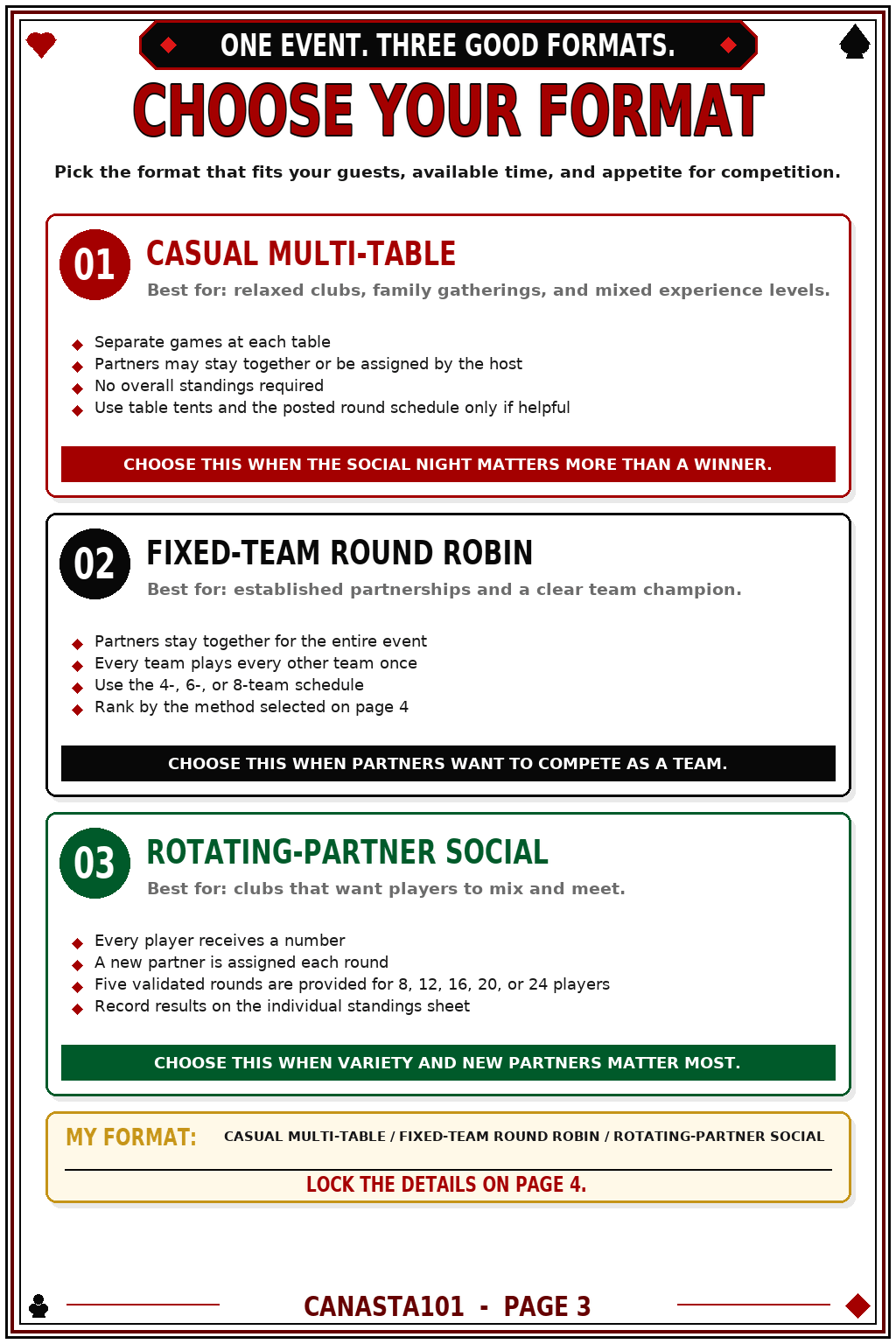
Before the first deal, choose the round length, movement pattern, scoring method, and tiebreaker. Announce the system once, post it where everyone can see it, and use it consistently at every table.
AVOID THESE
Common Canasta game-night mistakes
Inviting first and counting chairs later
Confirm how many complete tables you can seat comfortably before finalizing the guest list.
Debating rules after the cards are dealt
Write down player-count variations and house rules before the first hand begins.
Putting food on the playing table
Cards, score sheets, melds, and two center piles already need most of the available space.
Mixing player-count rules
Two-, three-, and four-player Canasta do not always use the same deal or going-out requirement.
Starting a timed round without a warning
Tell every table how the active hand will be handled and announce the remaining time clearly.
Making the host score every table
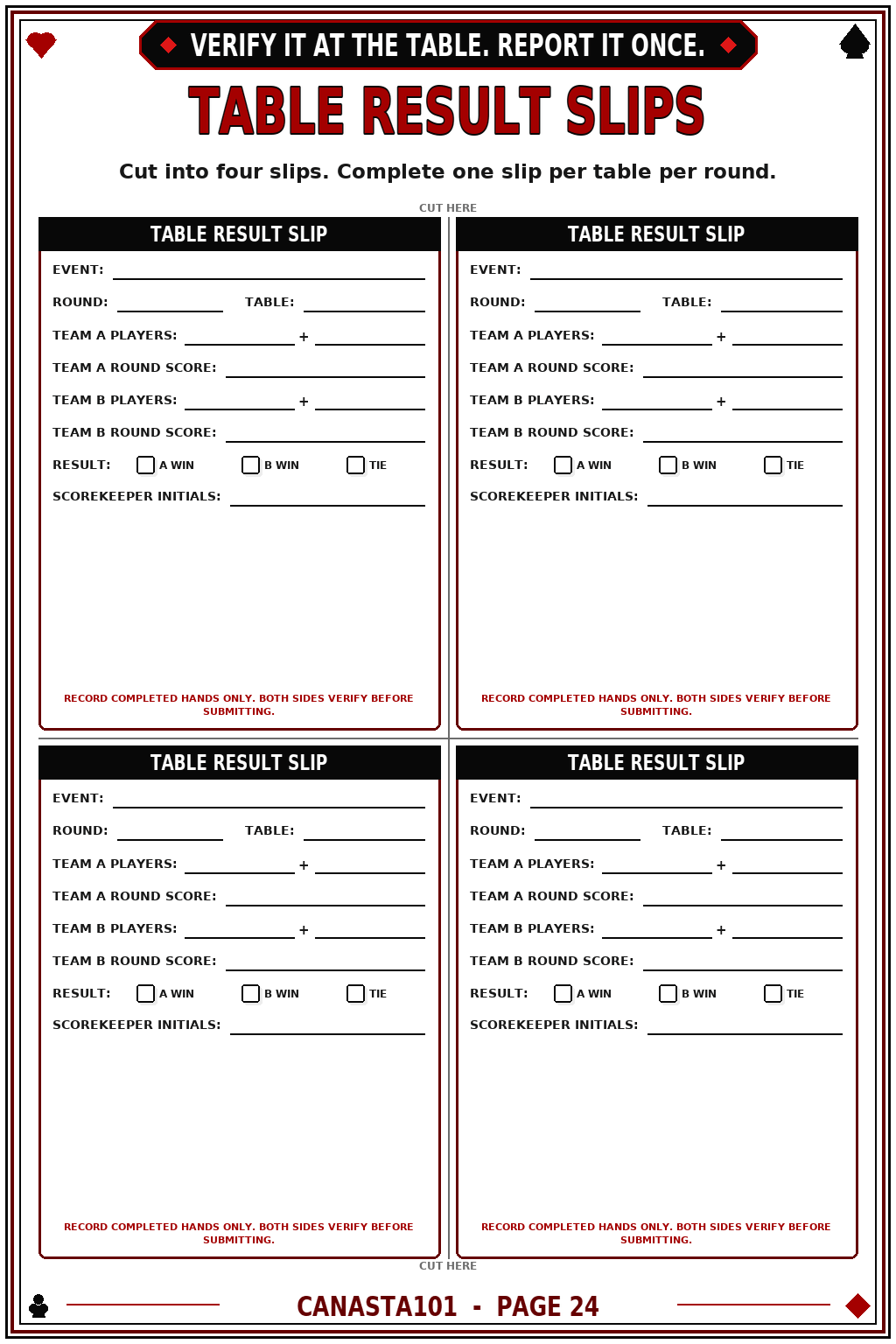
Choose one scorekeeper per table and use the same score sheet or calculator across the room.
USEFUL RESOURCES
Set up the night before the doorbell rings
QUICK ANSWERS
Canasta game night FAQ
How many people do you need for a Canasta night?
Two people can play, but four players at one table is the easiest social format because two partnerships can compete. Larger groups can use several tables.
How long should a Canasta party last?
A three-hour invitation gives many casual groups time to arrive, review the rules, and play. The exact length depends on experience, player count, and whether you use a target score or timed rounds.
What should guests bring?
Ask for low-mess snacks or drinks. The host should confirm that every table already has a complete 108-card pack, scoring method, pencils, and agreed rules.
Can beginners and experienced players play together?
Yes. Pair patient experienced players with beginners, explain only the essential rules first, and keep a reference nearby for the exceptions.
How do I run a Canasta tournament?
Choose the number of tables, decide whether rounds are timed, prepare table assignments and rotations, and use one scoring and tiebreaker system throughout. Write those decisions down before the first round so every table follows the same system.
A SEPARATE CANASTA101 PRODUCT
Ready for a smoother game anytime?
Also grab our Complete Canasta Guide and keep it by the cards at all times. This separate 28-page guide includes illustrated rules, strategy, scoring help, quick-reference pages, and reusable score sheets for the table.
See the 28-Page Printable Guide